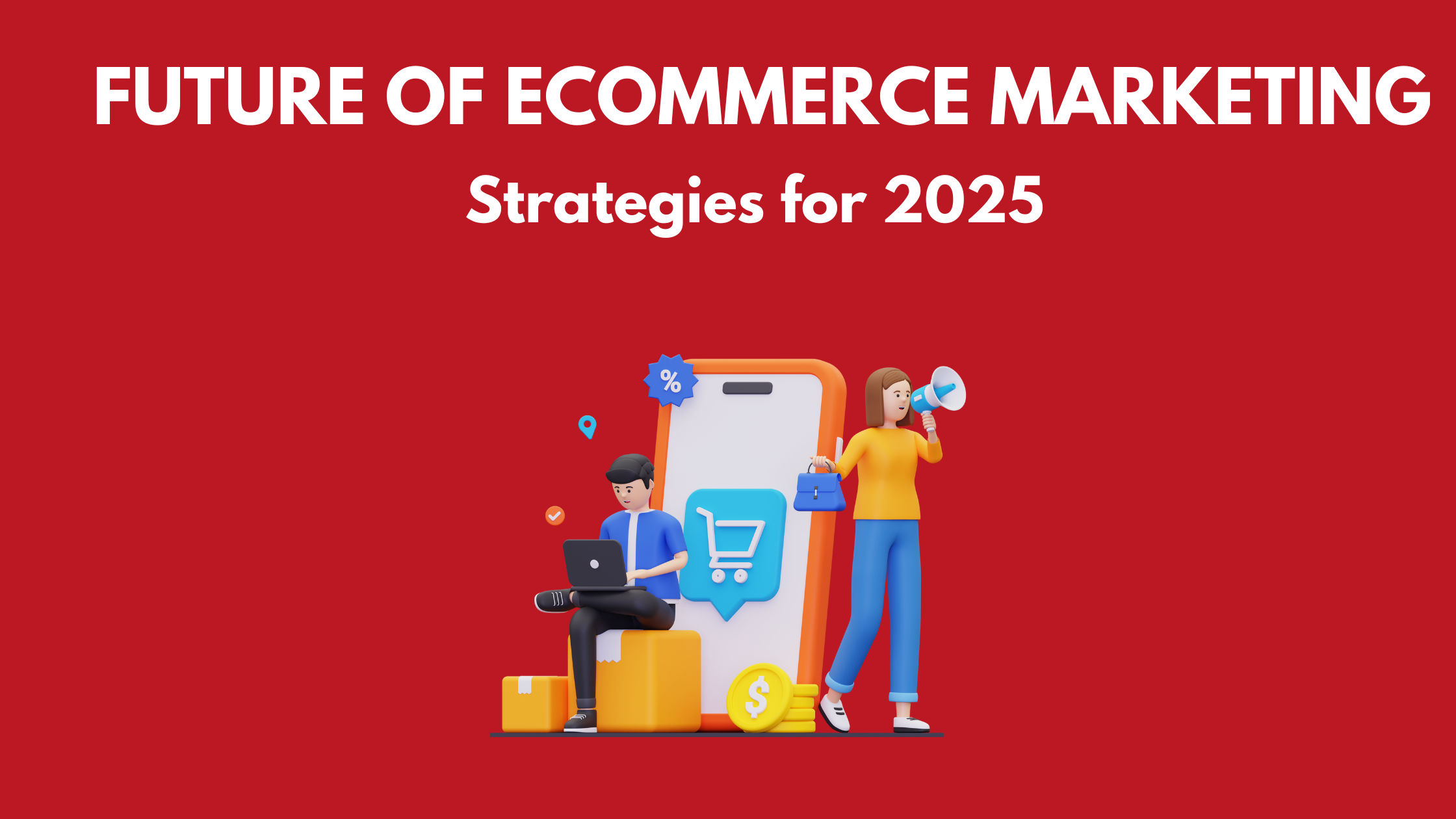
The future of online marketing is changing at a rapid pace, influenced by AI, personalization, and new technologies. In 2025 and the years that follow, companies need to learn to cope with trends such as voice commerce, social commerce, AR/VR shopping experiences, and data-driven marketing strategies. This blog examines the newest innovations, future-proofing strategies, and actionable takeaways to keep brands ahead of the competitive digital market.
The Evolution of E-commerce Marketing
How E-commerce Has Changed Over the Years
From websites to online shops, mobile buying, social shopping, and recommendations through AI, e-commerce has evolved significantly. Brands need to keep up with changing consumer behaviour and technological evolution to survive.
Key Trends on the Horizon through 2025
The ascent of AI marketing automation
More dependence on voice search and intelligent assistants
Development of direct-to-consumer (DTC) brands
Augmentation of social commerce on channels such as Instagram and Facebook
Top E-commerce Marketing Strategies for 2025 & Beyond
1. AI & Machine Learning in Marketing
AI-driven chatbots and customer support
Behavioural product recommendations
AI-based ad targeting and content generation
2. Personalization & Hyper-Targeted Campaigns
Employing customer data to provide personalized product recommendations
Dynamic pricing strategies that change according to demand and user behaviour
Behavioural email marketing for enhanced engagement
3. Voice Search & Conversational Commerce
Content optimization for voice search queries
Utilizing voice assistants such as Alexa & Google Assistant to generate sales
Rolling out chat-based shopping experiences
4. Social Commerce & Influencer Marketing
Utilizing Instagram and Facebook Shops for straight sales
Working with micro-influencers for genuine promotions
Embedding shoppable live streams
5. Augmented Reality (AR) & Virtual Shopping Experiences
Allowing customers to try out products virtually prior to purchase
Building immersive brand experiences through AR filters
Adopting 3D product visualization
6. Omnichannel Marketing for Seamless Customer Journeys
Ensuring a unified experience on web, mobile, and physical stores
Using retargeting ads and automated reminders
Synchronizing inventory and customer data across platforms
7. Subscription-Based & Loyalty Programs
Promoting repeat buying with special member offers
Implementing tiered loyalty programs
Providing automated reordering for key products
8. Sustainable & Ethical Marketing Approaches
Promoting green products and packaging
Emphasizing fair-trade and ethical sourcing
Linking brand values with social responsibility
The Use of Data & Analytics in Marketing for E-commerce
Customer Data-Driven Strategies
Using big data to gain customer insights
Using predictive analytics to predict trends
Personalizing through AI-driven segmentation of data
Predictive Analytics to make informed decisions
Applying historical data to predict customer buying habit
Optimizing inventory management and forecasting demand
Refining pricing strategies with dynamic adjustments
Challenges & Opportunities in E-commerce Marketing
1. Privacy Issues & Data Security
Adjusting to more stringent data regulations such as GDPR & CCPA
Building customer trust through open data policies
2. Increasing Customer Expectations
Delivering faster delivery and smooth checkout experiences
Delivering top-notch customer service across all touchpoints
3. Competing in a Saturated Market
Differentiating brands through distinctive storytelling and branding
Using niche marketing tactics to attract loyal customers
Conclusion
E-commerce marketing in 2025 will be defined by AI, personalization, voice search, social commerce, and omnichannel strategies. Companies that adapt to these trends will increase customer engagement, sales, and long-term brand loyalty.
Final Thoughts: Preparing for the Future
To remain competitive, brands need to innovate, optimize, and adapt repeatedly to new technologies and consumer demands. Through AI-powered automation, influencer partnerships, or immersive shopping experiences, the future of e-commerce marketing is data-driven, customer-focused, and technology-fueled.
#ecommerce# social# online marketing# 2025# AR# VR#ONLINE MARKETING# sales growth# trend# shopping# website# websites#2025 website traffic# seo
Logixhunt is an IT company that provides cutting-edge services in the fields of website development, software development, and mobile app development. Logixhunt is dedicated to providing quality services to our clients, and helping young college students learn the most in-demand skills in the industry. We offer 3 and 6 months internship programs to college students, so they can stay up to date with the latest trends in the field. Our experienced team of professionals is always ready to help students hone their skills and become the next generation of tech professionals.
Related Blogs
.png)